

Table of Contents
- Why Organizing Tools in the Garage Starts With a Plan
- Garage Tool Storage Ideas That Use Vertical Space
- How to Organize Hand Tools So You Can Find Them
- How to Store Power Tools in a Garage Safely
- Build a Garage Tool Inventory You Will Actually Use
- Budget Tiers and DIY vs. Buy Decisions
- Keeping Your Garage Tool Storage Organized Over Time
- Frequently Asked Questions
Last Updated: October 19, 2026
Why Organizing Tools in the Garage Starts With a Plan
Most garages fail at storage for one reason: nobody planned the space before filling it. Tools pile up on the floor, duplicates hide in drawers, and the thing you need is always behind three things you don't.
At Rivet QR, we've talked to enough homeowners to know the pattern. The garage is the last room anyone designs, so it becomes the default dumping ground for everything from screwdrivers to camping gear.
The fix starts with three questions:
- What do you actually own?
- How often do you use each item?
- Where does it need to live so you can reach it fast?
Answer those first, and the storage decisions get much easier.
Garage Tool Storage Ideas That Use Vertical Space
Vertical space is the most underused asset in any garage. The floor fills up fast, but walls and ceilings stay empty.
Start by looking at your walls as real estate. A standard garage has far more wall area than floor area once you subtract the vehicle footprint. Use it.
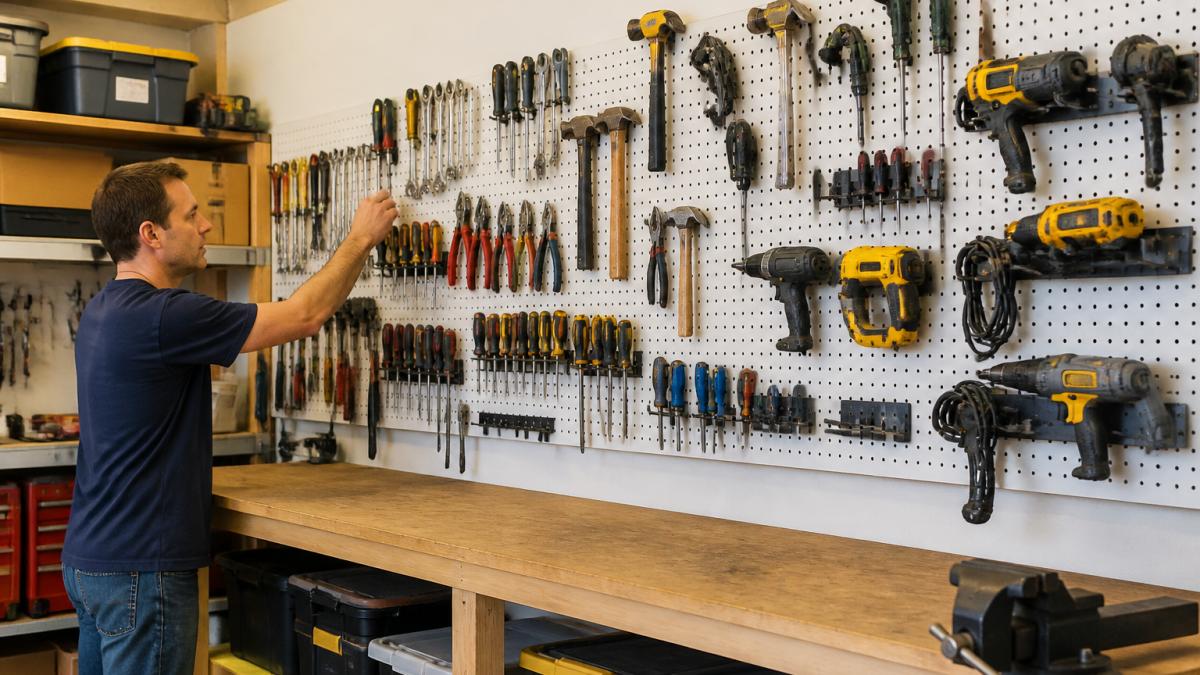
Wall-Mounted Racks and Hanging Systems
Wall-mounted racks and hanging systems turn bare wall space into usable tool storage. These systems hold ladders, long-handled tools, cords, and bikes off the floor.
A few practical picks:
- Pegboard for hand tools and small parts
- Slatwall panels for adjustable hooks and bins
- Heavy-duty hooks for ladders and extension cords
Mount everything into studs, not just drywall. A loaded rack that pulls out of the wall is a real hazard. Use a stud finder and lag bolts for anything heavy.
Shelving Units and Overhead Bins
Shelving units handle the bulky stuff that won't hang. Think toolboxes, cases, and bins of hardware. Overhead bins use the space near the ceiling for items you rarely touch.
Match shelf height to use:
| Shelf Height | Best For | Access Frequency |
|---|---|---|
| Below waist | Heavy bins, cases | Occasional |
| Waist to shoulder | Daily tools | Daily |
| Above shoulder | Seasonal gear | Rare |
| Ceiling | Long-term storage | Rare |
Label every bin. A shelf of unlabeled boxes is just clutter with extra steps.
How to Organize Hand Tools So You Can Find Them
The best way to organize hand tools is to group them by job, not by type. A "plumbing" drawer with the wrench, tape, and sealant together beats a drawer of every wrench you own in a row.
Here is a step-by-step workflow that works in a real garage:
- Empty everything onto a table. All of it, every drawer, bin, and coffee can.
- Sort by task. Plumbing, electrical, carpentry, general repair, automotive.
- Toss duplicates and broken tools. Most garages have three tape measures and one that works. Keep the best, donate the rest.
- Group by frequency. Daily, weekly, seasonal. This decides location, not just category.
- Assign a home and a format. Drawer, peg, bin, or case, and label it.
- Return one group at a time. Finish the daily-use group before starting the seasonal group so the garage is usable mid-project.
A common mistake is buying organizers before sorting. You end up with a beautiful system that fits the wrong tools. Sort first, then buy.
Match the Storage Format to the Tool
Different hand tools need different homes. Use this as a starting point:
- Screwdrivers, pliers, and small cutters: shallow drawers with dividers, or a pegboard if you have wall space. Drawers keep dust off and hide clutter; pegboards keep tools visible and grab-ready.
- Wrenches and sockets: a dedicated wrench rack or socket rail inside a drawer. Rails prevent the "pile of wrenches" problem and let you see missing sizes at a glance.
- Hammers and mallets: wall hooks or a deep drawer with a molded insert. Heavy heads store better low and close to the bench.
Small Parts and Hardware
Hardware storage is where most garages lose control. Loose screws, nails, anchors, and electrical connectors migrate into every corner. The fix is a single hardware zone with clear bins and dividers.
- Use clear bins with adjustable dividers so you can see contents without opening every bin.
- Sort by project or category, deck screws, drywall anchors, wire nuts, picture hangers, rather than by size alone.
- Keep a small parts organizer in the daily-use zone for the handful of fasteners you reach for constantly.
Drawer Layout Mechanics That Save Time
A drawer is not a box, it is a layout. A few mechanics make hand tool drawers work harder:
- Put the most-used tool at the front edge, not the back. Your hand should land on it without reaching.
- Orient long tools front-to-back so they do not block shorter items.
- Leave one empty slot in each drawer for the tool you just bought or the one that is out on a project.
If you share tools with family members, label the drawer or bin by task ("Plumbing," "Electrical") rather than by person. Task labels survive turnover and make it obvious where a tool belongs when someone else puts it away.
How to Store Power Tools in a Garage Safely
Storing power tools in a garage safely means protecting them from moisture, dust, and theft while keeping batteries in good condition. Garages swing between hot and cold, and that is hard on tools and batteries. The goal is a storage setup that keeps tools dry, charged, and ready without turning the bench into a pile.
Store by Tool Type, Not by Convenience
Power tools are not one category. A drill, a circular saw, and a battery charger have different storage needs.
- Drills and drivers: a wall-mounted rack or a dedicated shelf at waist height. Keep the chuck key and bits in a small bin next to the drill, not in a drawer across the garage.
- Circular saws and larger saws: low shelves or a locking cabinet. Blades are sharp and heavy; store them below shoulder height so you are not lifting a saw overhead.
- Batteries: a cool, dry shelf away from direct sunlight and off the concrete floor. Extreme cold drains batteries and shortens life; extreme heat degrades cells.
Battery and Charger Safety
Battery safety is the part most garage setups get wrong. A few practical rules:
- Keep batteries at moderate temperatures. Do not leave them in a freezing garage corner or on a sunny windowsill.
- Store chargers off the floor and away from water sources like a utility sink or garage door track.
- Do not stack batteries loosely in a drawer. Use a battery rack or a case with individual slots so terminals cannot contact metal objects.
For battery safety and storage guidance, check the U.S. Consumer Product Safety Commission battery safety guidance.
Moisture, Rust, and Dust
Garages are humid, dusty, and sometimes unheated. That combination is hard on steel tools and battery contacts.
- Keep tools off the bare concrete floor. Moisture migrates through concrete and rusts anything sitting directly on it.
- Use closed cases or drawers for precision tools like calipers, squares, and anything with a machined edge.
- Wipe down tools before storage if they have been outside or in a damp area. A light coat of tool oil on bare steel helps prevent rust.
Security and Heavy-Item Safety
A garage is often the easiest room to break into, so high-value power tools deserve a locking cabinet or a locked wall rack. For heavy items:
- Mount racks into studs, not drywall. A loaded power tool rack that pulls out of the wall is a real hazard.
- Store heavy cases low. A heavy toolbox or saw case on a high shelf is an injury waiting to happen.
- Keep sharp blades and bits in labeled cases so they are not loose in a drawer where a hand can find them.
Never store propane tanks, gasoline, or solvents near power tools or anything that sparks. Keep flammables in a separate, ventilated area away from chargers and batteries.
Build a Garage Tool Inventory You Will Actually Use
A garage tool inventory is a record of what you own and where it lives. It sounds like extra work, but it's the difference between "I think I have one" and knowing in seconds.
Why bother? Three reasons:
- You stop buying duplicates.
- You find things fast.
- You have a record for insurance if something is stolen or damaged.
Simple Ways to Track What You Own
You don't need a spreadsheet with 40 columns. Pick a method you'll keep up with.
- Paper list taped inside a cabinet door. Low effort, easy to forget.
- Spreadsheet on your phone. Flexible but easy to abandon.
- Inventory app with search and labels. Built for this exact job.
This is where Rivet QR fits. It's a free home inventory app with no subscription. You log what you own, add where it's stored, and search in your own words later. Optional QR labels let you scan a bin and see everything inside.
Budget Tiers and DIY vs. Buy Decisions
You can organize a garage at almost any budget. The question is where to spend and where to build.
| Approach | What It Covers | Best For |
|---|---|---|
| DIY pegboard and hooks | Hand tools, small items | Tight budgets |
| Prefab shelving | Bins, cases, bulky gear | Fast setup |
| Wall track systems | Adjustable, expandable storage | Growing collections |
| Custom cabinets | High-value tools, clean look | Long-term setups |
DIY saves money but costs weekends. Prefab systems cost more but install fast. A common mistake is overbuilding custom storage for tools you rarely use.
For garage safety and ventilation basics, the U.S. Department of Energy guidance on home energy and garage safety is a useful reference.
Keeping Your Garage Tool Storage Organized Over Time
Any system falls apart without maintenance. The garage is where clutter creeps back fastest, so build in simple habits.
Try these:
- The one-in, one-out rule. New tool in, old one out.
- A monthly five-minute reset. Return stray tools to their homes.
- A seasonal swap. Move summer gear down, winter gear up.
A quick quarterly check keeps labels accurate and catches tools that wandered off. For families sharing gear across homes, an app that multiple people can search makes a real difference.
The goal isn't a perfect garage. It's one where you can walk in, grab what you need, and get back to the project.
Frequently Asked Questions
What is the best way to organize tools in a garage?
Start by sorting every tool into keep, donate, and toss piles, then group the keepers by type and frequency of use. Put daily hand tools on a pegboard or wall-mounted rack at eye level, and store power tools in cabinets or on shelves with chargers nearby. Add a garage tool inventory so you can search for anything you have not used in a while. This sequence keeps floor space clear and makes the most-used items easy to grab.
Is it okay to store power tools in an unheated garage?
Most power tools handle cold garages, but batteries are the weak point. Lithium-ion batteries lose capacity when stored below freezing, so bring them inside or keep them in an insulated cabinet. Condensation is the bigger risk: let tools reach room temperature before use and wipe down metal surfaces. Keep chargers off damp floors and store cords coiled rather than kinked to extend their life.
How can I organize garage tools without spending a lot?
Use what you already have first. A sheet of plywood and some screws make a simple wall-mounted rack, and clear jars or coffee cans hold screws and small parts. Repurpose a bookshelf as a shelving unit and add cheap hooks for hanging tools. A garage tool inventory app like Rivet QR is free and needs no subscription, so you can label bins and search for items without buying a full storage system.
How do I keep garage tools organized after sorting them?
Set a five-minute reset at the end of each project: return every tool to its marked spot and put loose screws back in their bin. Label shelves and drawers by category so nothing drifts. Once a season, do a quick pass to remove duplicates and update your garage tool inventory. The goal is a system that survives a busy week, not a perfect showroom.
Organizing tools in the garage comes down to a plan, vertical space, and a system you'll actually maintain. If finding your stuff is the real problem, Rivet QR makes it simple. Log your tools, add optional QR labels to bins, and search in your own words to see exactly what you have and where it's stored. It's free, with no subscription required. Start for free and give your garage a digital memory.